
Capillary Rheometers for Polymer Testing
PULIMO PLM-CR capillary rheometers measure polymer melt flow under controlled test conditions. Compare four configurations for your material and measurement task.
A servo-driven piston moves melt through a selected capillary die while pressure and temperature are recorded. Choose the barrel arrangement, force range and analysis functions for your laboratory task.
Configurations · Specifications · Measurement scope · Supply scope · Enquiry
Four capillary rheometer configurations
Select the instrument around the required measurement and workflow. A higher maximum force alone does not define a wider useful viscosity range.
Reference images follow the PULIMO equipment guide, with equipment markings retained. The PLM-CR-02 image is a reference illustration, not a verified product photograph. Final identification, configuration and accessories are confirmed in the quotation; earlier equipment markings do not establish model interchangeability.
PLM-CR-01 — Compact single barrel
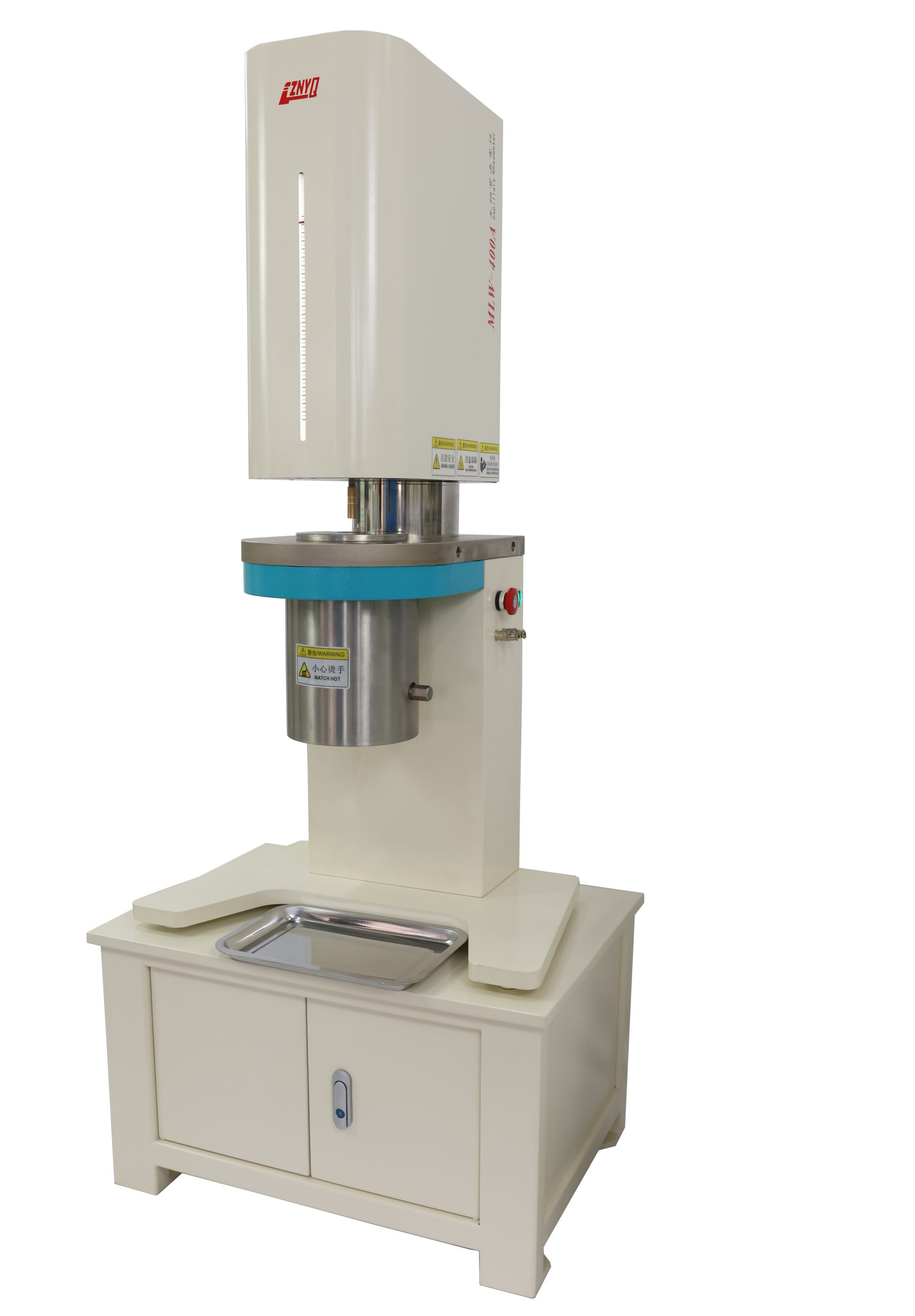
Routine grade, formulation and temperature comparisons within the selected force and pressure range.
PLM-CR-02 — High-force H-frame
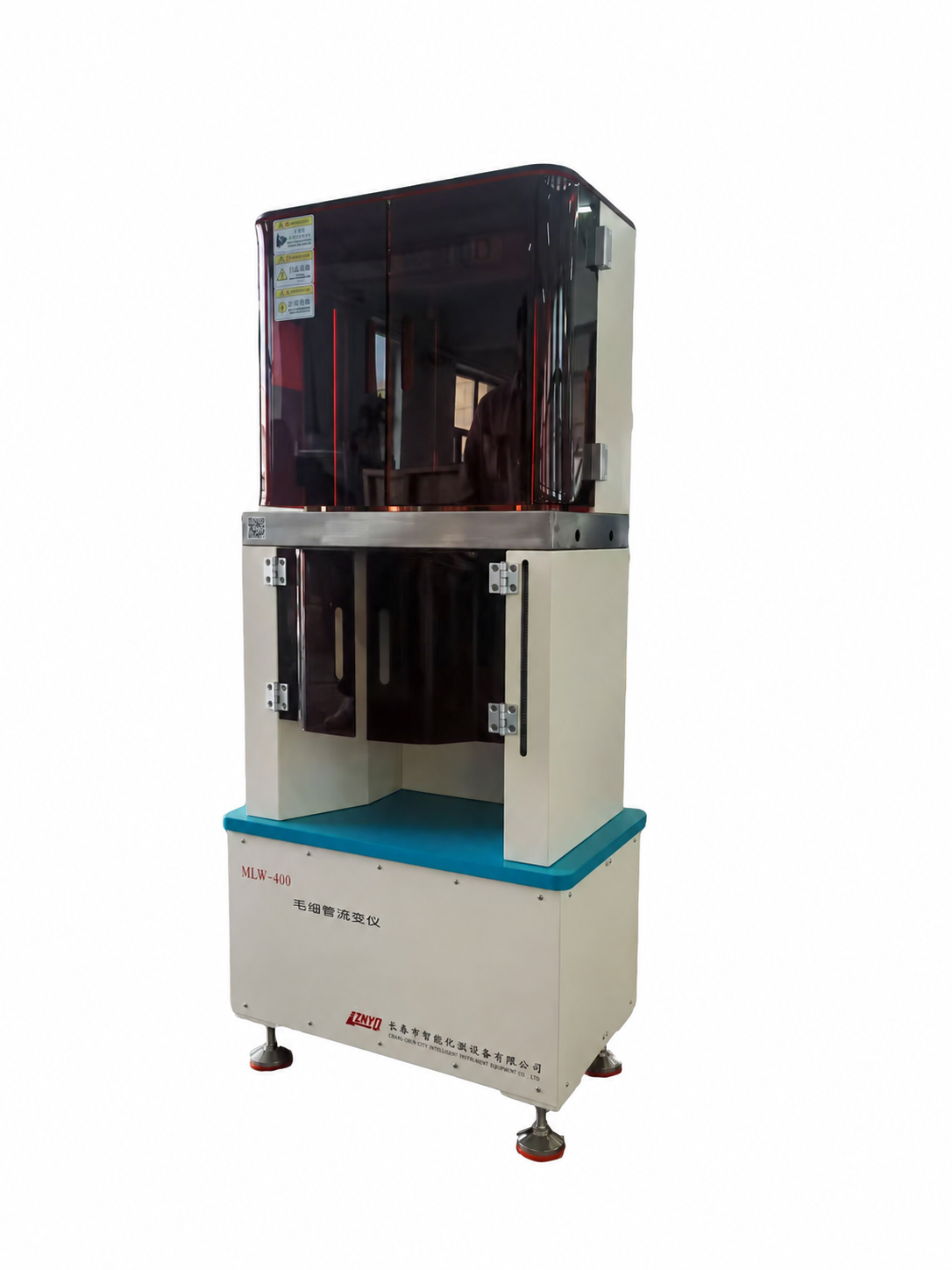
A higher-force single-barrel configuration selected around the material and die geometry.
PLM-CR-03 — Dual-barrel comparison
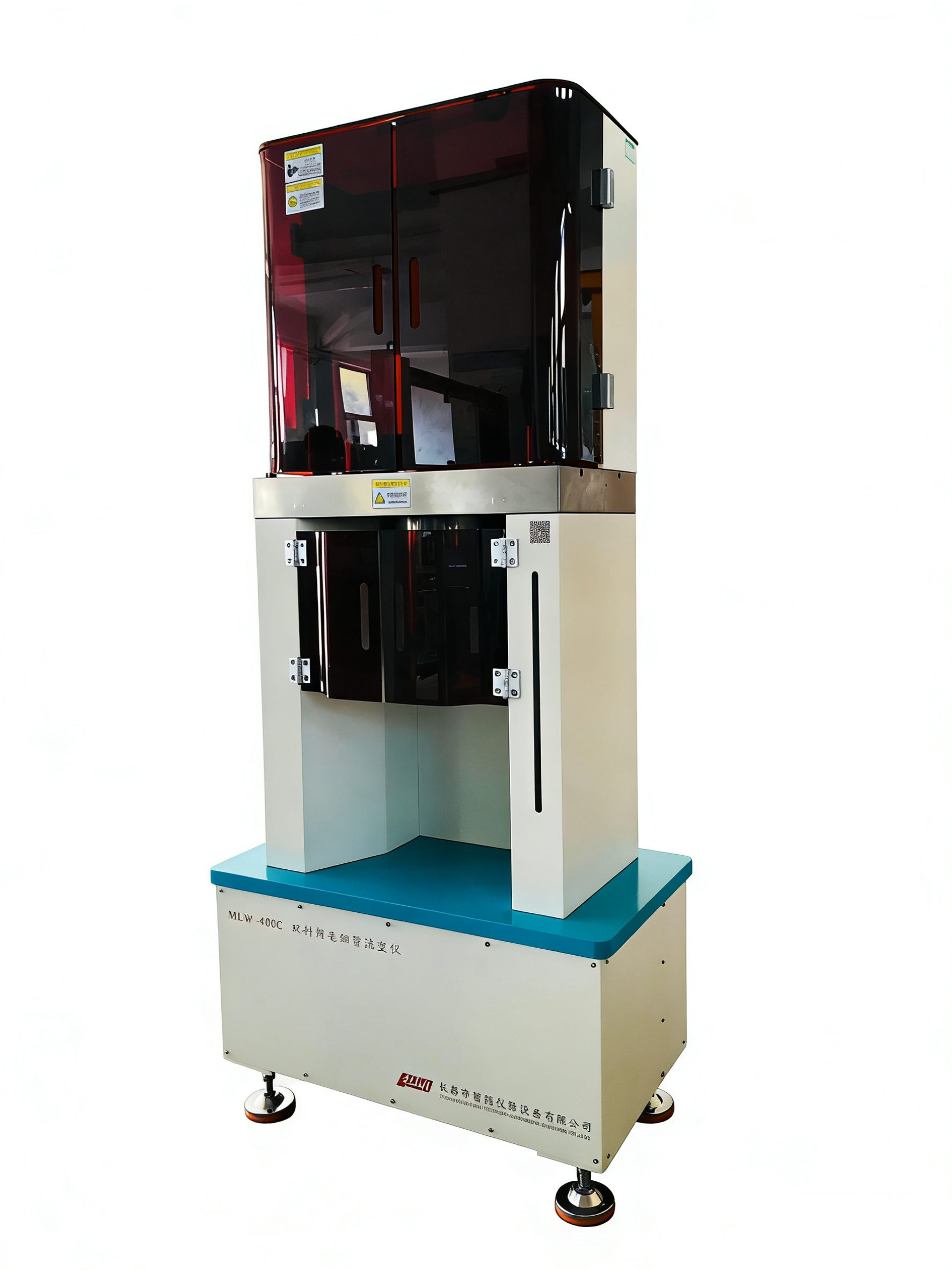
Parallel measurement channels for comparison and configured long-die / zero-length-die correction.
PLM-CR-04 — Research access and cleaning
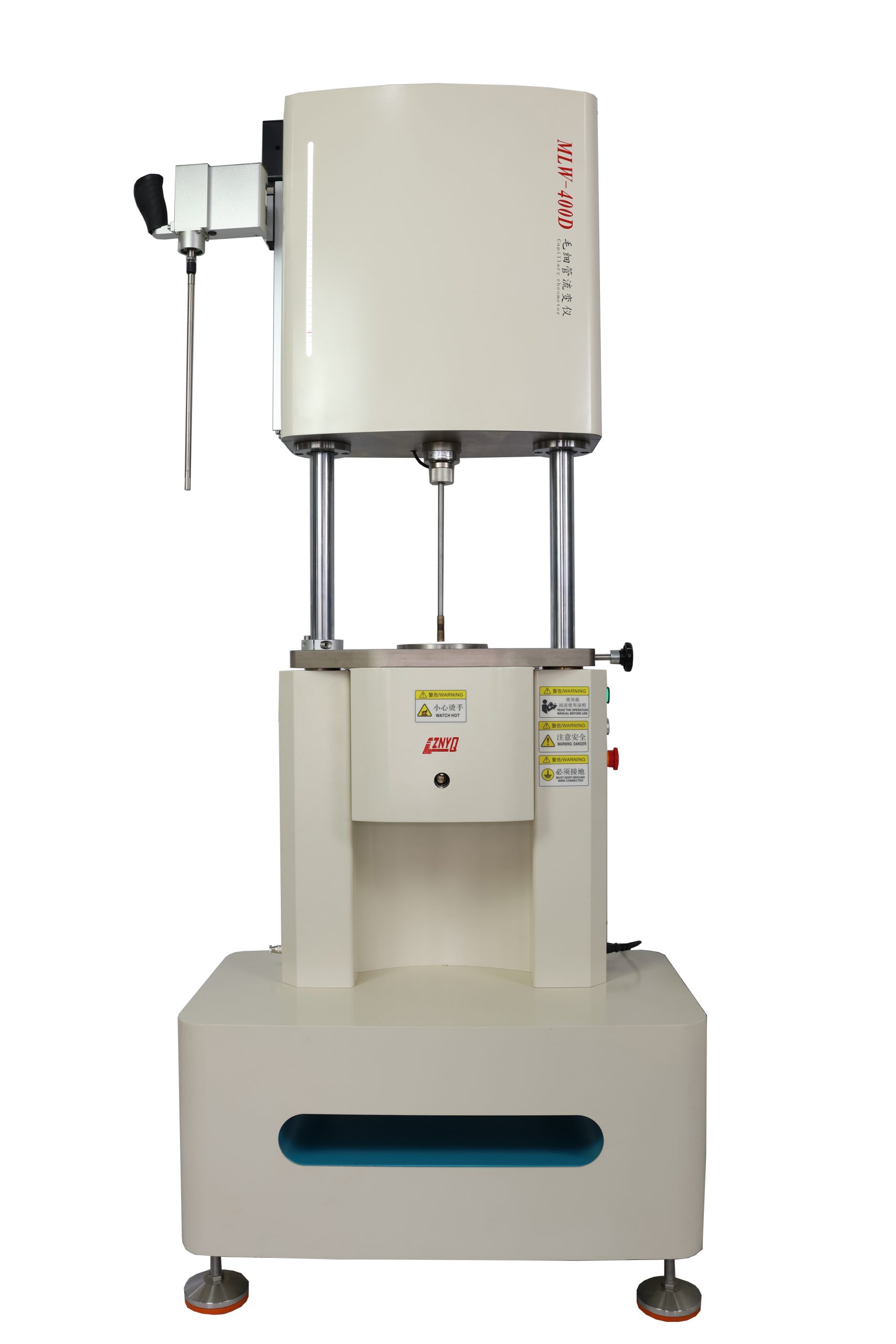
Single-barrel research platform with a rotating furnace and electric auxiliary cleaning; selected dual-head expansion.
Capillary rheometer specifications and model comparison
The values below describe selectable configurations, not interchangeable operating limits. The quotation identifies the selected sensors, loading system, dies and software.
| PARAMETER | PLM-CR-01 | PLM-CR-02 |
|---|---|---|
| Mechanical arrangement | Single column; swing head | H-frame; single barrel |
| Loading force | 5 kN maximum | 20–50 kN configuration; 50 kN maximum |
| Pressure range | 1–50 MPa | 1–100 MPa |
| Temperature / heating rate | Ambient to 400°C / 1–6°C/min | Ambient to 400°C / 1–6°C/min |
| Piston speed / diameter | 0.01–500 mm/min / Ø12 mm | 0.01–500 mm/min / Ø12 mm |
| Reference dimensions | 600 × 410 × 2,100 mm | 620 × 530 × 2,000 mm |
| Selected expansion | Melt-drawing accessory | Dual pressure heads; low-temperature structure |
| PARAMETER | PLM-CR-03 | PLM-CR-04 |
|---|---|---|
| Barrel / measurement arrangement | Dual barrels; dual pressure and load channels | Single barrel; pressure and load sensing |
| Loading force | 10, 20 or 50 kN configuration | 10 or 20 kN configuration |
| Pressure range | 1–50 or 1–100 MPa | 1–100 MPa |
| Temperature / heating rate | Ambient to 400°C / 1–6°C/min | Ambient to 400°C / 1–10°C/min |
| Piston speed / diameter | 0.01–500 mm/min / Ø12 mm | 0.01–500 mm/min / Ø12 mm |
| Reference dimensions | 620 × 530 × 2,000 mm | 800 × 450 × 1,650 mm |
| REFERENCE MASS | — | 200 kg |
| Selected expansion | Low-temperature test structure | Dual-head arrangement |
| PARAMETER | SPECIFICATION |
|---|---|
| Temperature range | Ambient to 400°C |
| Temperature resolution | 0.1°C |
| Pressure accuracy | ±0.5% FS |
| Piston speed / diameter | 0.01–500 mm/min / Ø12 mm |
| Standard capillary dies | Ø1 mm; lengths 5, 10, 20 or 40 mm |
| Heating rate | 1–6°C/min; research configuration up to 10°C/min |
Reference dimensions relate to the listed configurations. Optional modules, alternative dies and analysis functions are specified separately.
Measurement scope and interpretation
Programmed piston movement and synchronized acquisition support flow-curve comparison. Available test modes include constant piston speed, constant pressure, stepped shear rate and temperature-dependent flow studies.
Compare materials only under identified die geometry and test conditions. Bagley correction addresses pressure end effects; it is distinct from non-Newtonian shear-rate correction.
Selected entrance-flow models provide derived extensional-viscosity estimates, not a direct uniaxial extension measurement.
Reference test methods
ISO 11443 · ASTM D3835 · GB/T 25278.
Method suitability depends on the supplied configuration, specimen and procedure. A listed method is not a third-party certification claim.
Capillary dies, sensors and calculations
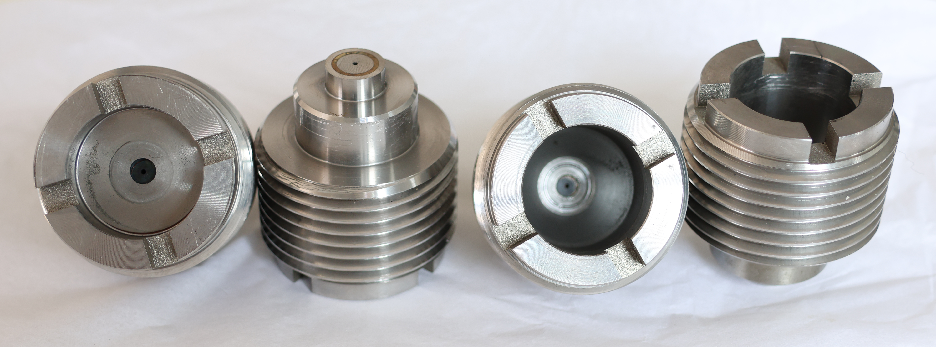
The listed tungsten-carbide die set uses a 1 mm bore with 5, 10, 20 and 40 mm lengths. A zero-length die belongs to the listed dual-barrel correction arrangement. Choose the pressure range and calculation method for the test.
Supply scope and selected options
| SYSTEM ELEMENT | LISTED SUPPLY ARRANGEMENT |
|---|---|
| Mechanical and drive system | Selected frame, barrel arrangement, servo drive, precision ball screw, displacement measurement and limit devices. |
| Temperature and pressure | Barrel heating and temperature control; pressure sensing and load-acquisition hardware for the selected configuration. |
| Computer and software | Computer-based control, measurement software, live display, curve comparison, saving and print functions. |
| Dies and cleaning | Four listed Ø1 mm capillary lengths and cleaning tools; zero-length die for the dual-barrel correction arrangement. |
| Electrical supply | Base specification AC 220 V; instrument power below 1,000 W. A 50/60 Hz configuration is supplied as specified; voltage matching uses a suitable isolation transformer. |
PLM-CR-01 / PLM-CR-02 options
Selected melt-drawing accessory for PLM-CR-01. Selected dual pressure heads or a low-temperature structure for PLM-CR-02.
PLM-CR-03 / PLM-CR-04 options
Selected low-temperature structure for PLM-CR-03. A selected dual-head arrangement can be added to the base single-barrel PLM-CR-04 research platform.
The equipment specification determines the final supply scope. An option is included only when expressly listed.
Request a capillary rheometer quotation
Please provide the polymer grade and temperature range, measurement objective, expected viscosity or pressure range, barrel preference, die requirements and intended analysis. Include the equipment quantity and destination country.
Related polymer laboratory equipment
Melt flow index testers for MFR and MVR measurement
MFR and MVR under specified conditions answer a different measurement question from a capillary flow curve.