
Extrusion Components
Twin-Screw Extruder Screw Elements
Introduction
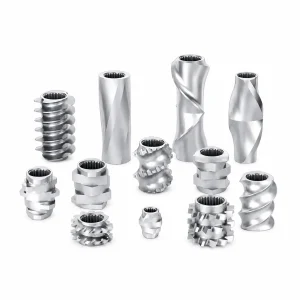
Twin-Screw Extruder Screw Elements are modular processing components used to configure the functional sections of co-rotating twin-screw extruders, including material conveying, compression, melting, mixing, kneading, dispersion, pressure control, and devolatilization.
A wide range of element geometries, sizes, and material grades is available to match different extruder models and processing requirements. Screw elements can also be customized according to existing samples, drawings, shaft dimensions, material formulations, and specific process conditions.
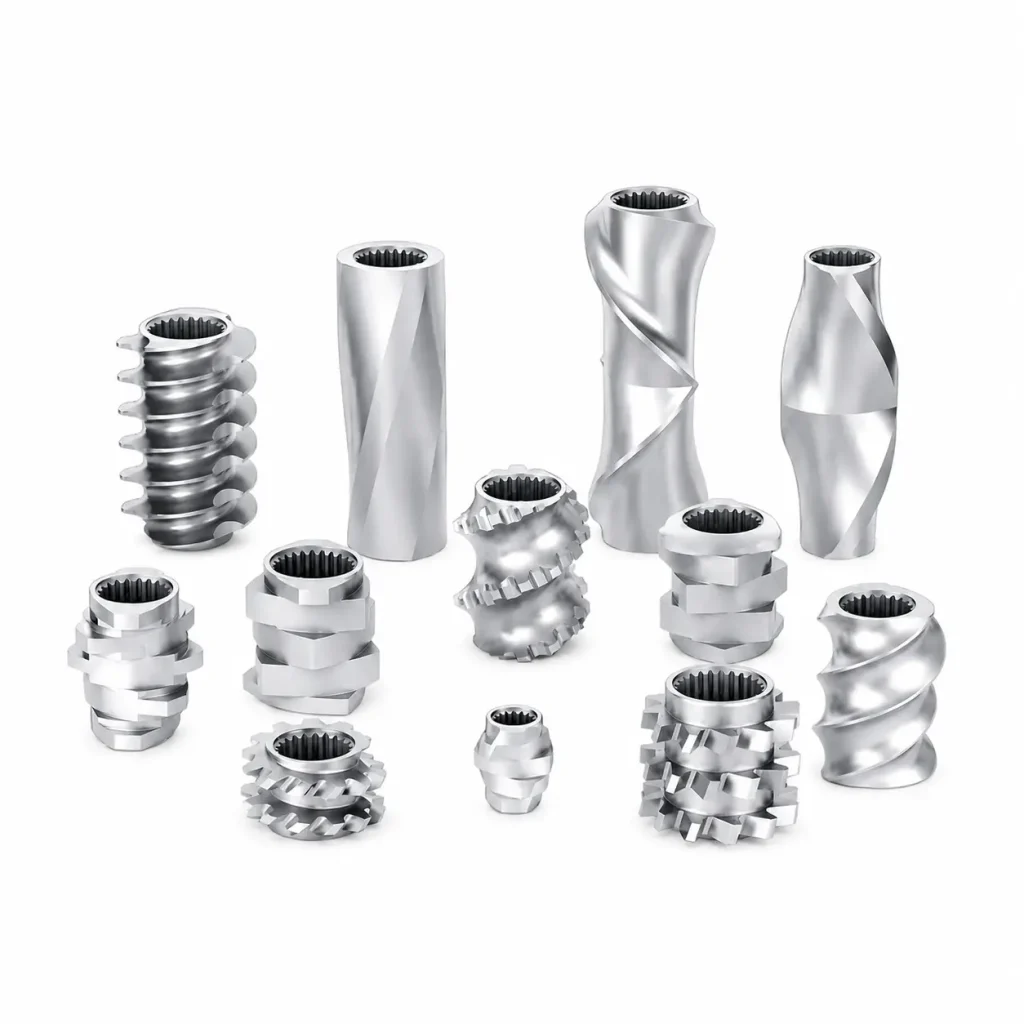
Overview
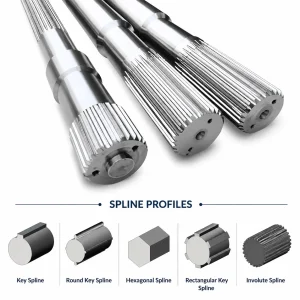
Screw elements are assembled on splined core shafts to form the complete screw configuration of a modular twin-screw extruder. Different element types perform different functions along the processing section and can be combined according to the required material behavior and process objective.
The available range includes conveying elements, kneading elements, mixing elements, transition elements, and special-purpose screw elements.
Conveying elements are available in different leads, pitches, and flight configurations for forward conveying, compression, pressure development, or reverse conveying. Kneading elements can be configured with different disc widths and stagger angles to control shear intensity, distributive mixing, dispersive mixing, and residence time. Specialized mixing elements can be used where enhanced homogenization or controlled shear is required.
Material selection is equally important. Standard nitrided steels, high-speed tool steels, stainless steels, nickel-based alloys, Hastelloy, and HIP powder-metallurgy grades can be selected according to wear, corrosion, torque, temperature, and service-life requirements.
This modular approach allows the screw configuration to be optimized not only for the extruder model, but also for the polymer formulation and actual processing objective.
Technical Specifications
- Product Type: Modular twin-screw extruder screw elements
- Compatible Equipment: Co-rotating twin-screw extruders and compatible modular compounding systems
- Conveying Elements: Single-flight, double-flight, triple-flight, transition, stretching, SK, SSK/SFV, and customized conveying elements
- Kneading Elements: Forward, neutral, and reverse kneading elements with configurable disc width and stagger angle
- Mixing Elements: SME, TME, ZME, CKE/TKD, and other specialized mixing geometries
- Special Elements: Side-feeder screw elements, transition elements, reverse elements, and process-specific customized elements
- Functional Configuration: Conveying, compression, melting, kneading, dispersive mixing, distributive mixing, pressure development, devolatilization, and discharge
- Connection Type: Internal spline connection matched to the extruder core shaft
- Standard Material: 38CrMoAlA nitriding steel or equivalent
- Wear-Resistant Material: W6Mo5Cr4V2 high-speed tool steel or equivalent
- Corrosion-Resistant Materials: SUS304, SUS316, SUS316L, Hastelloy, and nickel-based alloys
- High-Performance Materials: HIP powder-metallurgy grades such as WR5, WR13, WR14, or equivalent wear- and corrosion-resistant alloys
- Manufacturing Process: Precision CNC machining, heat treatment, and post-heat-treatment CNC grinding according to material and specification
- Shape Accuracy: Up to approximately ±0.015 mm, depending on geometry and specification
- Kneading Disc Spacing / Thickness Tolerance: Up to approximately ±0.03 mm
- Length Tolerance: Up to approximately ±0.01 mm
- Surface Roughness: Up to Ra ≤ 0.8 μm on specified precision-machined surfaces
- Inspection: Raw-material verification, dimensional inspection, spline inspection, surface inspection, and final quality control
- Customization: Available according to extruder model, screw diameter, center distance, shaft spline, drawings, samples, material formulation, and process requirements
Note: Screw element geometry, dimensions, spline profile, material grade, heat treatment, and surface treatment should be selected according to the extruder model, material formulation, processing conditions, and wear or corrosion requirements. For replacement parts, please provide the extruder model, screw diameter, center distance, shaft dimensions, technical drawings, or physical samples to ensure compatibility.
Key Features
- Complete Element Range: Multiple conveying, kneading, mixing, transition, and special-purpose elements are available for building complete twin-screw configurations.
- Process-Oriented Screw Configuration: Elements can be selected and arranged according to conveying, melting, mixing, dispersion, pressure, residence-time, and devolatilization requirements.
- Multiple Conveying Geometries: Different flight numbers, leads, pitches, and conveying directions allow adjustment of conveying capacity, filling level, pressure development, and residence time.
- Configurable Kneading Elements: Forward, neutral, and reverse kneading blocks with different stagger angles provide flexible control of shear and mixing intensity.
- Specialized Mixing Elements: Various mixing geometries are available for applications requiring enhanced distributive or dispersive mixing while controlling shear and material temperature.
- Precision Manufacturing: CNC machining and post-heat-treatment precision grinding help maintain dimensional consistency and reduce distortion caused by heat treatment.
- High Interchangeability: Controlled spline and dimensional tolerances support reliable installation and replacement in compatible extrusion systems.
- Multiple Material Grades: Materials can be selected according to abrasion, corrosion, torque, temperature, and expected service life.
- Wear-Resistant Solutions: High-speed tool steels and HIP powder-metallurgy materials are available for highly abrasive formulations containing glass fiber and mineral fillers.
- Corrosion-Resistant Solutions: Stainless steels, Hastelloy, nickel-based alloys, and specialized materials are available for corrosive polymers, additives, and chemical processing environments.
- Replacement & Retrofit Capability: Screw elements can be supplied for routine replacement, maintenance, capacity upgrades, and modification of existing screw configurations.
- Custom Manufacturing: Non-standard and discontinued elements can be manufactured according to drawings, physical samples, dimensional measurement, or specific process requirements.
Applications
- Polymer Compounding: Blending polymers with additives, modifiers, stabilizers, pigments, fillers, and other functional ingredients.
- Engineering Plastics Modification: Processing PA, PC, PBT, PET, ABS, PPS, PEEK, and other engineering polymers.
- Glass-Fiber Reinforced Compounds: Processing short- and long-glass-fiber reinforced thermoplastics requiring high wear resistance.
- Mineral-Filled Compounds: Compounding calcium carbonate, talc, barium sulfate, silica, and other mineral-filled formulations.
- Masterbatch Production: Color masterbatch, filler masterbatch, additive masterbatch, and functional masterbatch.
- Flame-Retardant Compounds: Incorporating and dispersing flame retardants and synergists into polymer systems.
- Thermoplastic Elastomers: Compounding TPE, TPU, TPR, and other elastomeric materials.
- Wood-Plastic Composites: Processing polymer systems containing wood flour, natural fibers, and other high-filler-content materials.
- Biodegradable Materials: Compounding PLA, PBAT, starch-based materials, and other biodegradable polymer formulations.
- Reactive Extrusion: Grafting, compatibilization, polymer modification, reaction-assisted blending, and other reactive processes.
- Recycling & Recompounding: Processing recycled plastics, regrind, recycled polymer blends, and modified recycled compounds.
- Powder Coating Compounds: Mixing and compounding resin, pigments, fillers, and additives for powder coating production.
- Cable Compounds: Processing flame-retardant, halogen-free, PVC, polyolefin, and other cable material formulations.
- Extruder Maintenance & Retrofit: Replacement of worn elements, reproduction of discontinued parts, and optimization of existing screw configurations for new materials or production requirements.
Interested in This Product?
If you’re interested in this product or have a specific application in mind, feel free to contact us. Share your material, process requirements, production capacity, and application details, and our team will recommend the most suitable configuration and technical solution to meet your production needs.
Our engineering team will recommend the most suitable solution.