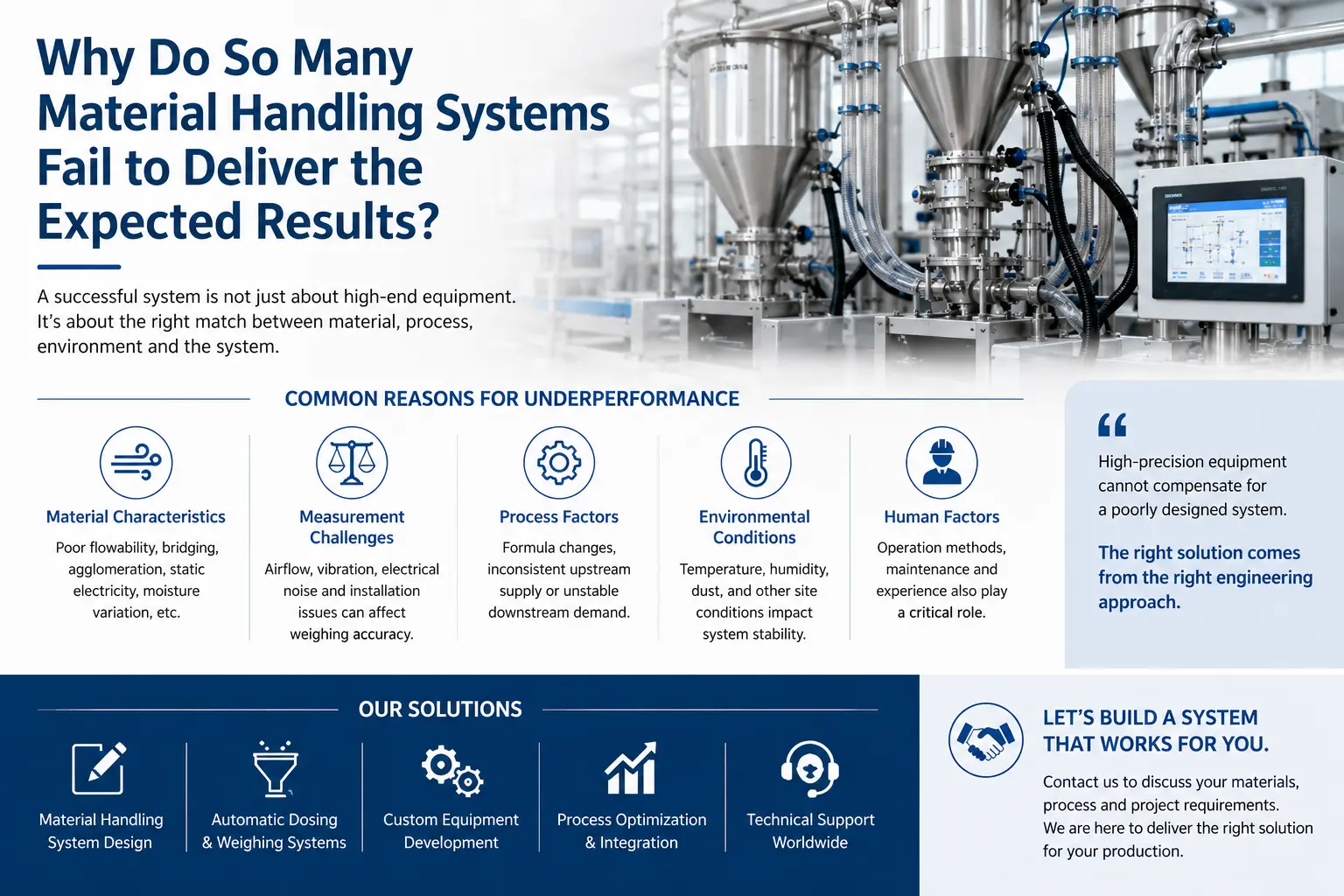
Why Do So Many Material Handling Systems Fail to Deliver the Expected Results?
Material handling systems fail not because of equipment limitations, but because the solution is not properly matched to the material, process, and production conditions.
Engineering Notes #8
Why Do So Many Material Handling Systems Fail to Deliver the Expected Results?
More manufacturers are investing in automated material handling systems to improve productivity, reduce labor, and achieve more consistent product quality.
However, after commissioning, many production lines still face unexpected challenges:
Unstable material feeding
Inconsistent dosing accuracy
Frequent adjustments after changing materials
Product quality fluctuations
In many cases, the issue is not the equipment itself.
The real challenge is whether the material, process, and handling system are properly matched.
Take the polymer industry as an example.
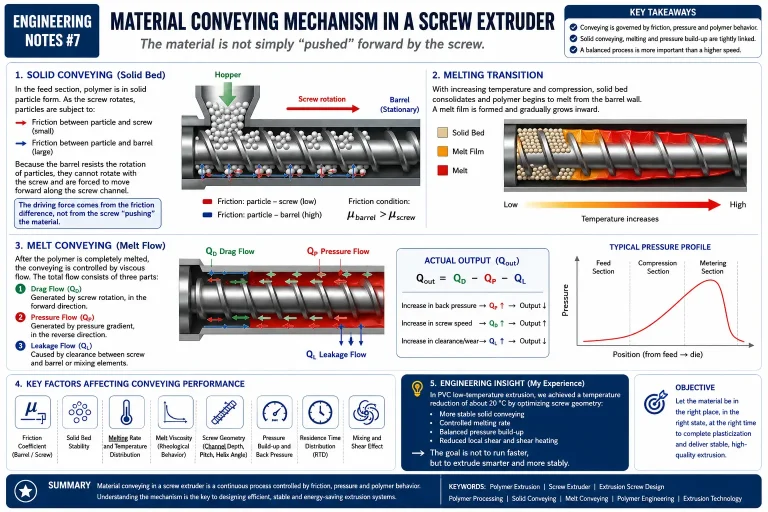
Different materials require completely different handling strategies.
Nano carbon black tends to agglomerate and generate static electricity. Certain flame retardants are prone to bridging in hoppers. Heated liquid additives require consistent temperature throughout the transfer process to maintain stable viscosity and flow.
Using the same conveying equipment for different materials rarely produces the same results.
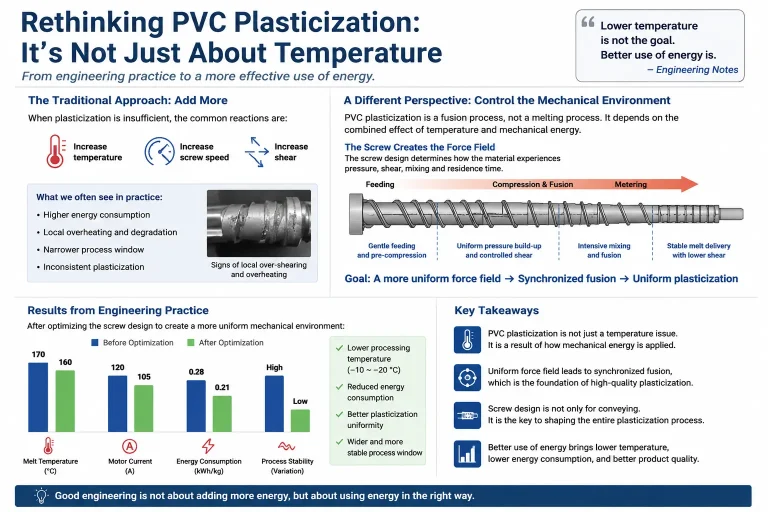
Another common misconception is that higher-precision equipment automatically delivers higher-precision dosing.
In reality, airflow, vibration, material moisture, electrical noise, installation quality, and many other factors can all influence the final performance.
A high-performance system is built on the right engineering approach, not simply on high-specification components.
For every project, we start with one simple principle:
Understand the material before designing the solution.
By evaluating material properties, production processes, and site conditions first, we can develop material handling and dosing systems that are stable, reliable, and tailored to real production needs.